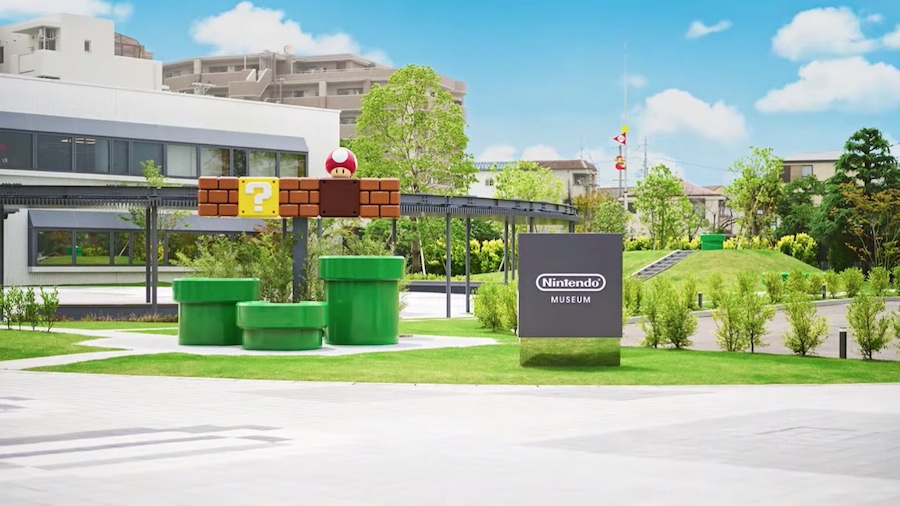
Nintendo Museum Unveils Surprising Pre-Gaming Inventions, Rewriting Company History
For generations, the name Nintendo has been synonymous with groundbreaking video games, iconic characters like Mario and Link, and revolutionary consoles from the NES to the record-breaking Nintendo Switch. Yet, as the highly anticipated Nintendo Museum prepares to open its doors on October 2 in Japan, fans and history buffs alike are discovering a truly unexpected facet of the company's illustrious 134-year journey: a fascinating and diverse pre-gaming era that includes everything from baby strollers to toy guns.
Hosted by the legendary Shigeru Miyamoto, the special preview event for the museum has unveiled displays that meticulously chart Nintendo's evolution. While much attention will undoubtedly focus on the technological marvels from the Famicom to the Switch 2, it's a specific exhibit dedicated to "before we made games" that is capturing imaginations worldwide. This deep dive into Nintendo's origins reveals a company far more eclectic and experimental than many might have ever imagined, showcasing a relentless spirit of innovation that predates its entry into the digital realm by decades.
From Hand-Painted Hanafuda to a National Enterprise
The story of Nintendo begins not with pixels, but with paper. Founded on September 23, 1889, by Fusajiro Yamauchi in Kyoto's Shimogyo-ku district, Nintendo Koppai was a small, artisanal enterprise dedicated to producing handmade hanafuda playing cards. These traditional Japanese "flower cards" were exquisite creations, printed on high-quality mulberry paper, meticulously colored by hand using vegetable dyes, and finished with a protective lacquer. Depicting seasonal flowers, animals, and poetic imagery, hanafuda cards were more than just a pastime; they were a significant part of Japanese recreational and even gambling culture during the Meiji era.
Yamauchi's unwavering focus on artisanal quality was a game-changer in a competitive market. His dedication ensured that Nintendo's hanafuda stood out, leading to rapid market penetration. By the early 1900s, what began as a humble operation had blossomed into Japan's leading hanafuda producer, supplying wholesalers across the nation and even securing strategic partnerships, such as with Japan Tobacco in 1907, which significantly broadened its distribution network. This early success underscored a foundational principle that would guide Nintendo for over a century: deliver a high-quality, engaging product that captivates consumers.
The company wasn't content to rest on its laurels, however. In 1902, Nintendo diversified its offerings by introducing Western-style playing cards. Initially aimed at the export market, these cards soon found immense popularity domestically, further cementing Nintendo's position as a dominant force in the card-making industry. This early pivot foreshadowed a corporate agility that would prove crucial in its later transformations. For a more detailed look at this incredible journey, explore From Hanafuda Cards to Switch 2: Nintendo's 134-Year Evolution.
The Era of Radical Diversification: Strollers, Guns, and Beyond
The Nintendo Museum's "before we made games" exhibit truly comes alive when revealing the company's extraordinary ventures beyond playing cards. Under the leadership of Hiroshi Yamauchi, Fusajiro's great-grandson, who took the helm in 1949, Nintendo embarked on a period of intense experimentation and diversification throughout the 1960s and 1970s. This era saw the company venture into seemingly unrelated markets, driven by a desire to find new avenues for growth and entertainment.
Among the most surprising artifacts on display are the Nintendo Baby Stroller and the Nintendo Gun. While the concept of Nintendo manufacturing baby products or firearms might seem incongruous with its modern image, these items reflect a strategic pivot towards broader consumer electronics and toys. The "Nintendo Gun" was, in all likelihood, an early light gun toy or perhaps a precursor to the peripherals that would later define its electronic games. These were not just random detours but calculated attempts to tap into burgeoning markets. The toy industry, in particular, provided a natural extension for a company whose core business was "play."
This period of radical diversification highlights Nintendo's remarkable willingness to innovate and adapt. While some ventures, like instant rice or a short-lived taxi service, did not achieve lasting success, they collectively forged a corporate culture of resilience, creativity, and a fearless approach to exploring new frontiers. Each experiment, successful or not, provided invaluable lessons in manufacturing, distribution, and understanding consumer behavior, all of which would prove instrumental when Nintendo finally turned its focus towards the emerging world of electronic entertainment.
The Bridge to Digital: From Toys to Electronic Games and the Rise of Consoles
The transition from diverse physical products to electronic gaming was a gradual but decisive one for Nintendo. Leveraging its experience in manufacturing and its innate understanding of what makes "play" engaging, the company began to shift its focus towards electronic games and arcade machines in the 1960s and 1970s. This was a pivotal moment, laying the groundwork for the global phenomenon Nintendo would soon become.
The first significant step into the video game console market came in 1977 with the release of the Color TV-Game series. These early consoles, though rudimentary by today's standards, marked Nintendo's official entry into home video entertainment. The lessons learned from these initial electronic ventures, combined with the company's long-standing commitment to quality and imaginative design, set the stage for its greatest triumph.
In 1983, the launch of the Family Computer (Famicom) in Japan, followed by its international release as the Nintendo Entertainment System (NES) in 1985, irrevocably changed the landscape of the video game industry. The NES single-handedly revived the North American market after the devastating crash of 1983, largely thanks to Nintendo's rigorous quality control through its "Seal of Quality" program and blockbuster titles like Super Mario Bros.. This era cemented Nintendo's legacy as a gaming powerhouse, a narrative beautifully chronicled in How Nintendo Consoles Shaped Modern Gaming: NES to Switch.
Nintendo's Enduring Legacy: A Future Built on a Diverse and Daring Past
The Nintendo Museum serves as a powerful testament to a company that has continuously reinvented itself, always with the core philosophy of "play" at its heart. From the intricate artistry of hanafuda cards to the innovative design of the Nintendo Switch, which has sold over 150 million units, and the highly anticipated Switch 2, achieving 5.82 million units sold in its debut quarter, Nintendo's journey is one of relentless evolution.
Understanding Nintendo's pre-gaming history enriches our appreciation for its modern success. The willingness to experiment with baby strollers and toy guns, or to dominate the playing card market, speaks volumes about the entrepreneurial spirit that fuels its innovation in gaming. Enduring franchises like The Legend of Zelda, Pokémon, and Animal Crossing are not just products of technological prowess, but also of a deeply ingrained corporate culture that values creativity, intuitive design, and appealing to a broad audience.
The Nintendo Museum promises to be an enlightening experience, offering a comprehensive look at how a small Kyoto card maker transformed into a global entertainment giant. It reminds us that innovation often springs from unexpected places and that a company's past, no matter how diverse, can profoundly shape its future triumphs. As visitors walk through the exhibits, they will witness not just the history of gaming, but the remarkable story of a company that dared to dream beyond its initial scope, building an empire on the foundation of play in all its forms.